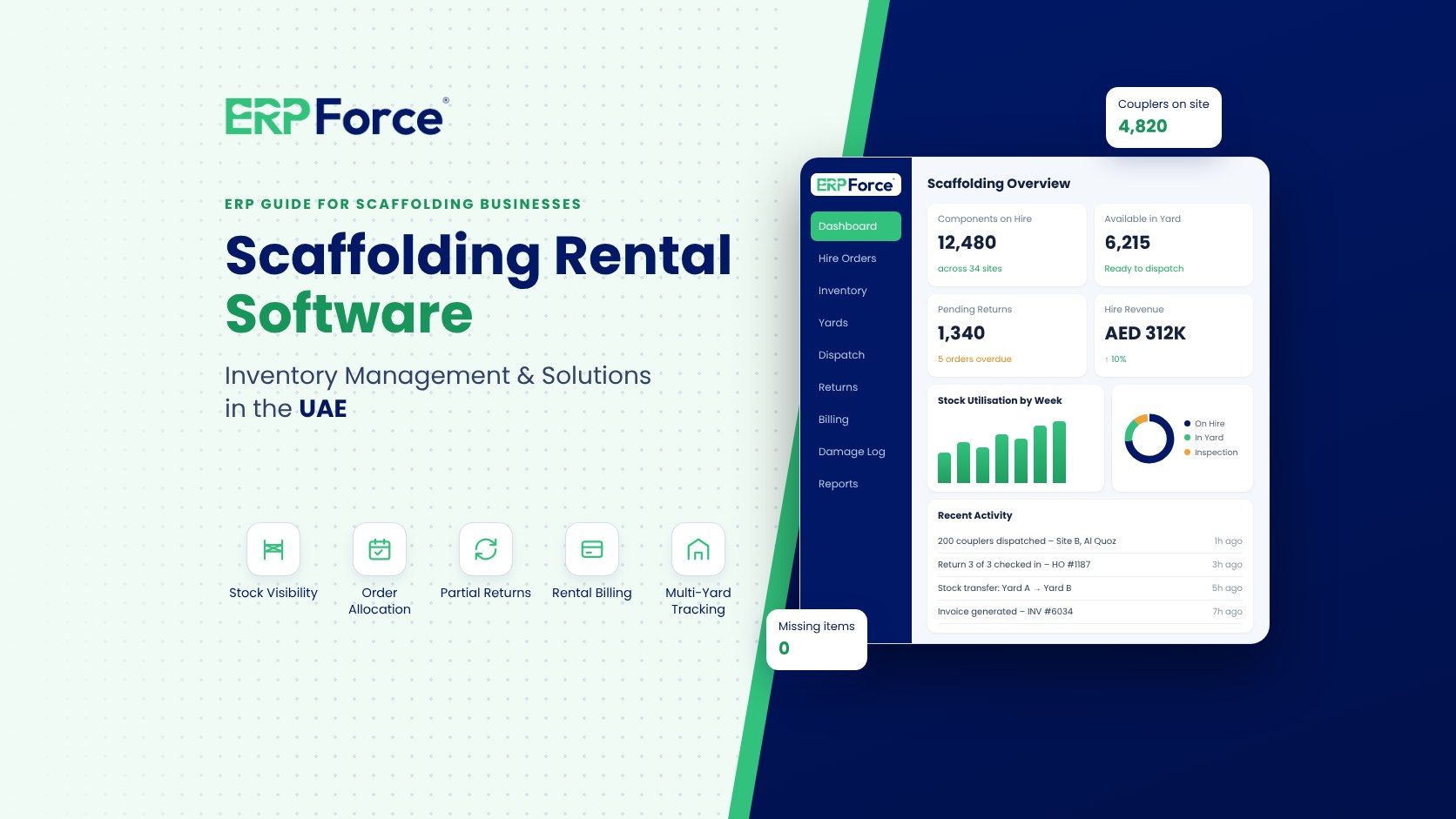
A scaffolding rental order doesn't end when the truck leaves the yard. The material might sit on a site for two months. The contractor calls and wants another 200 couplers. The return comes back in three separate trips, and until the last one is checked in, someone at the rental company is still chasing it.
Now multiply that by thirty active orders. The warehouse team is counting tubes and fittings, dispatch is confirming a delivery window, and accounts is trying to work out whether a hire period has ended. If each department keeps its own spreadsheet, getting one clear answer becomes difficult.
That's the exact gap scaffolding rental software is meant to close: one system instead of five records that only partially match.
The Inventory Problem Is Bigger Than It Looks
People often assume scaffolding inventory is simply a count of tubes, frames, couplers, and platforms on the shelf. It doesn't. Some stock is available for hire, some is reserved for next week's orders, and a lot of it is sitting at customer sites. Returned items may also need inspection before they can be sent out again.
This is where scaffolding inventory management software comes in. Staff can log where equipment is, who has it and how much of it has come back. When the numbers don’t add up, the original delivery record gives a starting point for investigating the gap. It can also stops managers from buying new stock simply because they’ve lost track of what they already own.
Three Everyday Jobs That Need Better Records
1. Knowing What's Really Available Before Promising a Delivery
A customer wants extra material delivered tomorrow. The warehouse balance may say you've got enough, but that balance may not account for stock already reserved for other orders
Accurate allocation records make that distinction clearer. They can also show whether stock needs to be moved from another warehouse before the delivery is arranged.
2. Chasing Equipment That Hasn't Come Back
If returns can’t be linked to the original dispatch, your team ends up making phone calls and waiting for answers from site.
Digital records give your team a starting point, for checking outstanding quantities and following up with customers.
3. Checking Whether the Rental Bill Is Right
Billing gets much tougher when items come back in several batches, or a contract runs past its end date. The accounts team needs the agreed terms, quantities dispatched, dates for returns, and any extensions to calculate charges accurately.
Well-configured scaffolding rental software connects these records, so staff don’t have to rebuild … from separate files. Less time on paperwork means more time for higher-value work.
How to Choose Scaffolding Software in the UAE
The right ERP for your business depends on its size and how it operates. A company that is just supplying a few local contractors doesn't need the same system as one serving construction projects across several Emirates.
When you are trying to weigh down different scaffolding software UAE such as ERPForce, test how it handles partial returns, stock transfers, multiple warehouses, rental extensions as well as the invoicing. Ask how damaged equipment is logged and whether you can trace a stock movement back to a particular order or customer.
Check the accounting and procurement linkages within the ERP. If your team still has to fill in the same details into two or three different systems, then that is again burdensome.
When Does an ERP System Make More Sense?
Inventory is only one part, but client orders affect dispatch planning, equipment purchases affect cash flow, and rental invoices can feed into accounts receivable.
An ERP system connects the functioning of it all, instead of keeping them as separate tasks from each other. Information recorded at dispatch can support the next rental billing, also the updated return records help the warehouse to keep recording of what's available for the orders after that.
For any rental business expecting further growth, scaffolding rental software integrated with a holistic ERP, like in case of ERPForce, system can provide a more interlinked view of equipment, customers' or clients' demands and monetary resources.
The crucial thing to keep in the mind is whether the ERP used fits the way your business is currently operating. Software won't just randomly fix every issue just like that, but it can make missing information easier to figure out and give everyone coherent information and records to work on.
Frequently Asked Questions (FAQs)
1. What Is Scaffolding Rental Software Used For?
Rental operations companies use scaffolding rental software to keep records of movement, manage clients' agreements, track returns, and keep the recorded information needed for rental billing.
2. Can Scaffolding Inventory Management Software Track Equipment at Different Sites?
Yes, equipment can be tracked by the system in more than one location. It can assist businesses screen warehouse inventory and materials sent to clients' sites. Accuracy still relies upon employees recording equipment movements and returns promptly.
3. What Should I Check Before Buying Scaffolding Software in the UAE?
Check whether or not the solution supports your rental functions, including partial returns, contract extensions, damaged stock, multiple locations, and accounting integration. Ask for an illustration using a realistic rental order instead of depending solely on a generic product presentation.
4. Can Scaffolding Rental Software Help With Billing Disputes?
Yes. Dispatch records, returned quantities and rental-period details give staff documented information to compare against a customer's billing concerns and investigate discrepancies.
5. Is an ERP System Necessary for a Scaffolding Rental Business?
Not necessarily. A standalone solution may be sufficient for a smaller operation. An ERP system becomes more useful when inventory, procurement, customer orders and accounting need to share consistent information.