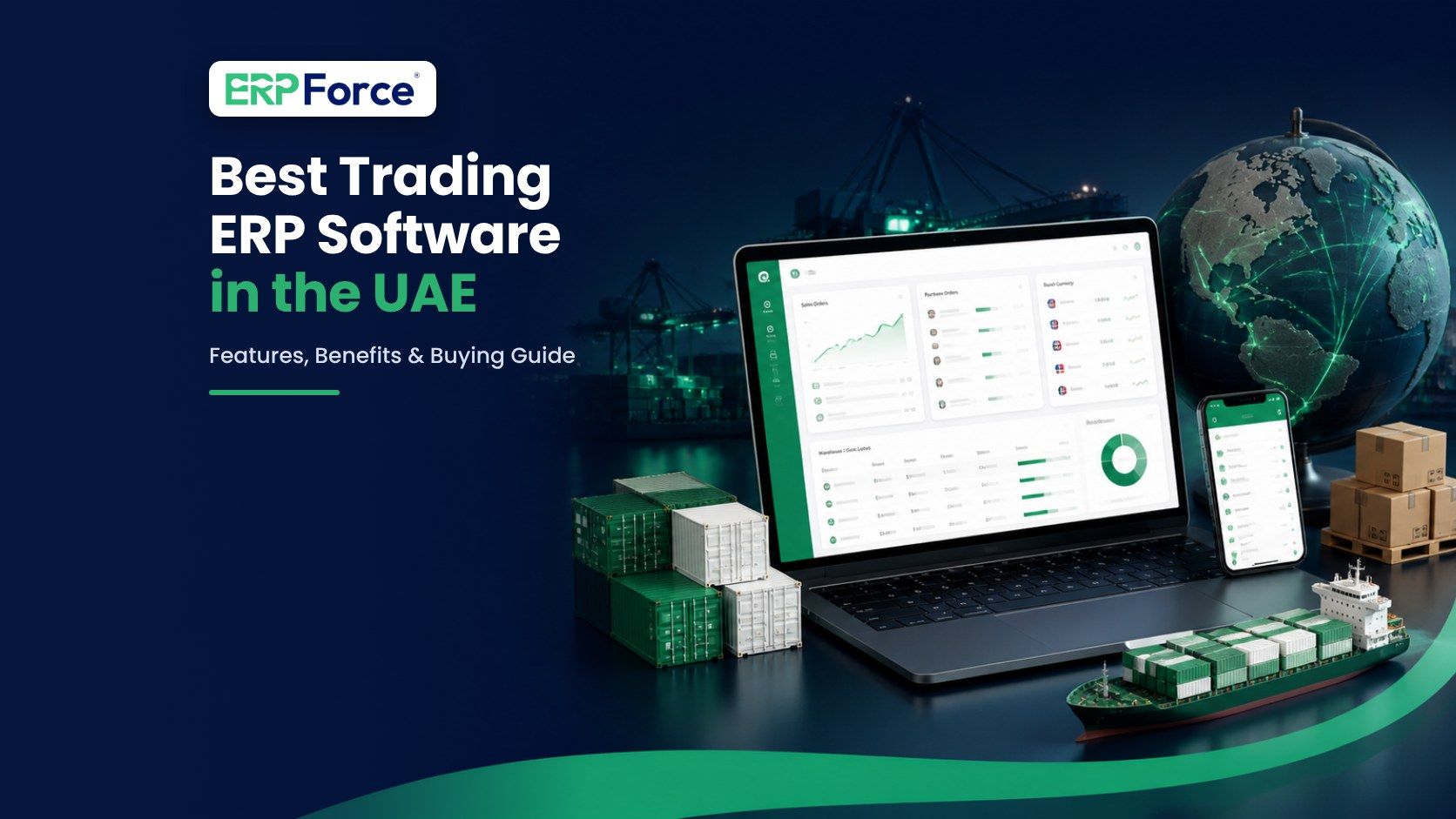
Best Trading ERP Software in the UAE: Features, Benefits & Buying Guide
The UAE's trading sector operates in a business environment that is quickly evolving, wherein organisations manage multiple suppliers, clients, warehouses, currencies and sales channels. Handling all of these through spreadsheets or disconnected software can make it tough to keep accurate records, manage inventory, and understand overall business performance.
This is where trading ERP software UAE solutions can add significant value.
What Is Trading ERP Software?
Trading ERP software is designed to run the operational and financial requirements of companies involved in buying, selling and distributing products. An ERP connects these processes so that the information can flow seamlessly across departments, rather than keeping separate systems for accounting, inventory, procurement, and sales, which creates a lot of confusion.
For businesses, the right solution for trading ERP software UAE ought to additionally accommodate specific business requirements, such as VAT compliance, multi-currency transactions, financial reporting, and scalable business operations.
Why Do Trading Businesses Need ERP?
Trading businesses often deal with large product catalogues, purchase orders, supplier relationships, client orders, stock movements and payment cycles. When these are managed separately, businesses may face stock discrepancies, delayed deliveries, duplicate data, and limited financial visibility.
An ERP such as ERPForce creates a centralised source of business data, allowing management teams to understand what has been purchased, what to buy, what has been sold and what remains.
Key Features to Look For
When evaluating trading ERP software UAE, businesses should focus on how effectively the system connects their workflows rather than simply counting the number of available modules.
1. Inventory Management
Real-time inventory visibility is crucial for trading businesses. A capable ERP like ERPForce needs to track stock throughout warehouses, monitor movements, identify low-stock items and provide accurate inventory data.
2. Sales and Customer Management
The ERP should connect quotations, sales orders, deliveries, invoicing and customer records. This reduces data entry which is repetitive and gives sales teams a clearer picture of customer activity.
3. Procurement Management
Businesses should be able to manage suppliers, purchase orders, receipts and procurement approvals from one system. All records of purchasing information can also support better supplier and buying decisions.
4. Accounting and VAT
Finance should not operate independently from sales and inventory. Integrated accounting helps businesses manage receivables, payables, expenses, and profitability while supporting UAE VAT requirements.
5. Multi-Currency Support
International trading businesses require reliable multi-currency functionality. The ERP should support transactions in different currencies while maintaining appropriate financial records and reporting.
Benefits of ERP for Trading Companies
Implementing trading ERP software UAE improves operational efficiency and decision-making by bringing sales, inventory, purchasing and finance onto one platform. Automation reduces manual work, errors and administrative effort.
Better Business Visibility
ERP such as ERPForce gives a unified view of business operations, helping teams access important data and records quicker.
How to Choose the Right ERP
Choosing an ERP ought to begin with business requirements rather than choosing a popular system. Businesses have to assess their existing processes, operational demands, and other specific functions associated with the business process.
Start by identifying key requirements across finance, sales, procurement, stock and warehouse management. Then evaluate how efficiently the platform integrates those capabilities.
It is also important to compare ERP software companies in UAE based on implementation support, scalability, security, customisation, training and after-sales service.
Businesses involved in both trading and production should also consider whether the platform can support ERP for manufacturing companies, particularly if manufacturing forms part of their long-term expansion strategy.
Final Thoughts
The best trading ERP software UAE solution is not necessarily the platform with the longest feature list. It is the one that aligns with the company's processes, provides dependable business visibility and can scale with operational complexity.
For the UAE businesses, the right ERP can connect finance, inventory, procurement and sales into a more structured operating environment, reducing inefficiencies, enhancing control, and helping make better business choices.
FAQs
1. What is the best ERP for a trading company in the UAE?
The best trading ERP software UAE solution depends on the company's size, workflows, inventory complexity, financial requirements and growth plans. Businesses should prioritise integration, scalability, UAE VAT support and ease of use.
2. Can ERP software manage multiple warehouses?
Yes. Many modern-day ERP systems may offer centralised visibility across multiple warehouses, including inventory transfers, receipts, dispatches, and inventory levels.
3. Does ERP software support UAE VAT?
Many ERP systems designed for the UAE market provide VAT-related accounting and reporting capabilities. Businesses should verify the specific VAT features and configuration before implementation.
4. Can trading ERP software support manufacturing?
Yes, depending on the platform. Businesses that combine trading with production should look for manufacturing capabilities such as Bill of Materials (BOM), production planning, costing, inventory consumption and quality management.