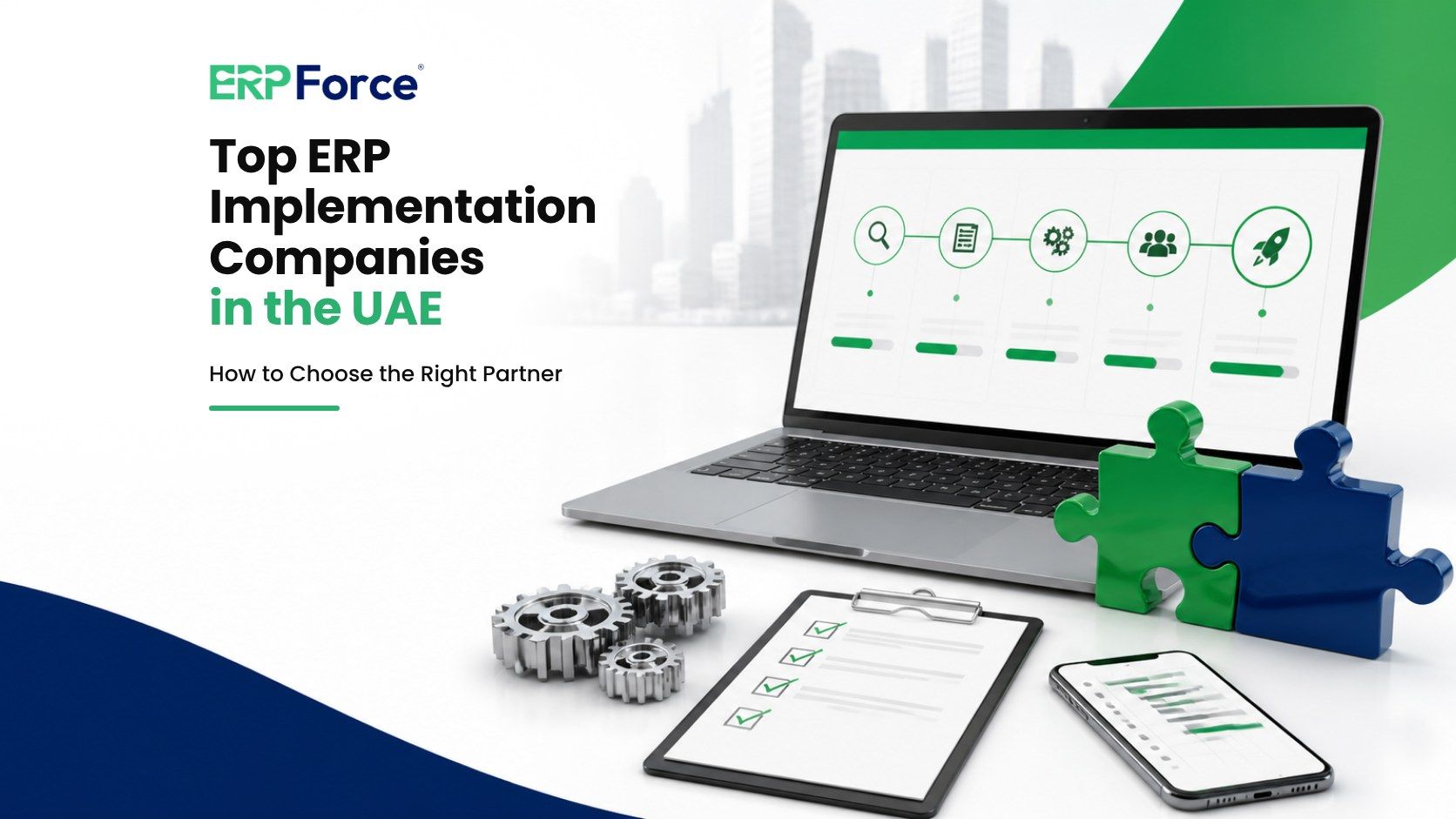
Choosing an ERP is a major business decision. But selecting the right implementation partner is just as important. The software may have powerful features. Yet your business still needs the right setup, data migration, integrations and employee training. This is where ERP implementation companies play an important role.
The UAE has a wide range of ERP providers. Some focus on SMEs. Others work with large enterprises or specific industries. The right choice depends on how well the partner understands your business and its day-to-day processes.
Quick answer
ERP implementation companies in the UAE configure the ERP around your processes, migrate and clean your data, set up integrations, train your teams and support you after go-live. Providers include ERPForce, Bista Solutions, Inova Tech, BrowseInfo, Plennix Technologies and Forefront Technologies. Before choosing, check their experience with similar businesses and their knowledge of UAE VAT, Corporate Tax, WPS and e-invoicing. Also check integrations, migration and training plans, post-launch support and transparent pricing.
Key takeaways
- The implementation partner matters as much as the ERP software itself.
- A good partner maps your processes first and avoids unnecessary customisation.
- Data should be cleaned before migration, or old errors move into the new system.
- Check 7 things: industry experience, UAE compliance knowledge, integrations, migration, training, post-launch support and pricing.
- Watch for red flags: unrealistic timelines, vague pricing, no testing plan and heavy customisation without a clear reason.
Why Your ERP Partner Matters
An ERP does not automatically improve a business after installation. It needs to be configured around how your teams actually work.
An experienced partner can identify inefficient processes before implementation begins. They can also recommend suitable modules and reduce unnecessary customisation.
A poor implementation can have the opposite effect. Employees may avoid the new system. Data may not transfer correctly. Reports may become unreliable. These issues can increase costs long after the initial project is completed.
What Do ERP Implementation Companies Actually Do?
Understand Your Existing Processes
The first step is understanding how your business operates. This may include finance, sales, purchasing and project management. The partner should identify manual tasks and duplicate work. They should also identify the gaps the ERP needs to address.
Configure and Customise the ERP
Configuration adapts existing ERP features to your business. Customisation involves developing additional functionality. Not every requirement needs custom development. Excessive customisation can make future upgrades harder and more expensive.
Migrate and Clean Business Data
Existing customer records, supplier details, product information and financial data may need to be moved into the new system. Data should be reviewed and cleaned before migration. Otherwise, old errors can simply move into the new ERP.
Train Teams and Go Live
Employees need practical training before the system goes live. Testing should also happen before the final launch. A good implementation plan gives teams time to understand new workflows rather than forcing everyone to learn after launch.
Top ERP Implementation Companies in the UAE
Several companies operate in the UAE ERP market, offering different platforms and areas of expertise. Businesses can include the following providers in their research:
ERPForce
ERPForce provides an integrated business management platform covering areas such as finance, sales, inventory, procurement, HR, projects and other business functions. Its UAE offering also focuses on local business requirements.
Bista Solutions
Bista Solutions provides ERP and business management solutions for organisations with varying operational requirements. Its services include implementation, consulting and customisation.
Inova Tech
Inova Tech offers ERP consulting and implementation services, including solutions built around Odoo. It can be considered by businesses looking for configurable ERP systems.
BrowseInfo
BrowseInfo provides Odoo-related services, including implementation, development and customisation. Its experience can be relevant for businesses requiring additional functionality or integrations.
Plennix Technologies
Plennix Technologies offers technology and ERP-related services for businesses looking to improve workflows and automate operations.
Forefront Technologies
Forefront Technologies provides ERP consulting and implementation services and can be considered by businesses looking for enterprise-focused technology solutions.
7 Things to Check Before Choosing an ERP Partner
1. Experience With Similar Businesses
Ask whether the provider has worked with businesses similar to yours. Industry knowledge can make implementation smoother. It helps if the ERP software companies in UAE already understand common workflows and challenges.
2. Knowledge of UAE Requirements
Your ERP may need to support VAT, Corporate Tax, payroll processes and upcoming e-invoicing requirements. Prefer ERP implementation companies that understand the UAE business environment.
3. Integration Capabilities
Your ERP must connect with banking platforms and CRM systems. It must connect with payment gateways, e-commerce tools or other software. Prefer to ask which integrations are supported and if additional development is required.
4. Data Migration Process
Do not overlook migration. You must ask what data will be transferred and how it will be cleaned. You must also see how accuracy will be checked after migration.
5. Training and Change Management
Even a well-designed ERP can fail if employees do not use it properly. Check how many training sessions are included and whether support is available during the transition.
6. Post-Implementation Support
Business needs do not stop changing after launch. Ask what support the ERP software companies in Abu Dhabi provides for troubleshooting, updates, new users and future improvements.
7. Transparent Pricing
Look beyond the initial quote. Check whether customisation, integrations, training, migration and ongoing support are charged separately.
Red Flags to Watch For
Be careful if a provider promises an unusually fast implementation without first studying your business.
Vague pricing is another warning sign. So is a proposal with no clear migration, testing or training plan.
You should also question partners that recommend extensive customisation without explaining why standard ERP features cannot meet the requirement.
A trustworthy provider should be willing to explain both the benefits and limitations of its proposed solution.
Conclusion
ERP implementation companies can help turn ERP software into a useful operational system. ERPForce offers an integrated ERP solution for UAE businesses looking to manage key business functions through one platform Connect today and see how it can fit your business needs.
FAQs
Should a business migrate all its old data into the new ERP?
Not necessarily. Old or duplicate records should be reviewed first so the new system starts with clean and useful data.
What should a business do if employees resist the new ERP?
Involve key users early, explain how the system will improve their work and provide hands-on training before the final rollout.
When should ERP implementation planning begin?
Planning should start before selecting the software. Understanding your processes and goals first makes it easier to choose the right solution and partner.
What should happen after an ERP goes live?
The first few weeks should include monitoring, troubleshooting and user support. This helps identify workflow issues before they affect daily operations.
Last updated: 18 November 2026 · By the ERPForce Team